A company may assume that if its traffic is increasing, new business will automatically follow. Marketing metrics may look healthy—paid ads get clicks, search rankings improve, social media engagement climbs—but sales are inconsistent, and fewer leads are being qualified.
When this happens, the problem may not be visibility but rather weak conversion paths once those potential customers land on that business’s website.
What Is a Conversion Path?
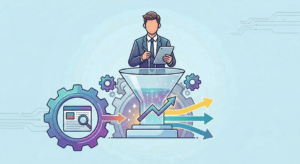
A conversion path is a series of interactions a person has with your brand that lead to a desired outcome—ideally, making a purchase, requesting a quote, scheduling a consultation, signing up for an email list, or submitting a contact form. Every click, landing page, and digital interaction influences whether that visitor continues on the customer journey toward that end result or decides to look for services elsewhere.
Understanding what conversion paths work best for your business is important, especially as customer expectations change. By today’s standards, people expect fast-loading websites, intuitive navigation, consistent messaging, and clear next steps for what they can do if they want to buy from you.
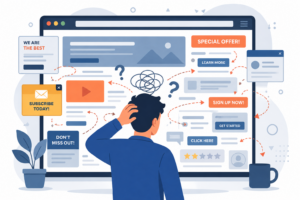
When a landing page feels cluttered or confusing, users rarely spend time trying to figure it out. They simply move on.
Why Weak Conversion Paths Hurt Growth
It can be a mistake to assume traffic metrics tell the full story. A company may celebrate an increase in website visits while overlooking high bounce rates, abandoned forms, short engagement times, and poor sales conversions. If that company is paying for clicks that never convert on advertising platforms such as Google, Meta, and LinkedIn, it’s also negatively affecting its customer acquisition cost (CAC).
At the same time, weak conversion paths can damage trust. Consumers often form impressions within seconds of visiting a website. A slow-loading page, confusing information, or a difficult checkout process can prompt them to reconsider a purchase.
The Most Common Conversion Path Problems
Confusing Landing Pages
Many landing pages try to convey too much information at once, from excessive text and generic messaging to multiple calls to action and unnecessary navigation.
The result is decision fatigue.
Instead, those pages should help visitors immediately understand what a business offers, why it matters, and what they should do next if they want that product or service.
Slow Website Performance
Website speed directly impacts user experience and search visibility.
Today’s consumers expect pages to load quickly, particularly on mobile devices. Even small delays can increase abandonment rates and reduce conversions. Large image files, excessive scripts, outdated website infrastructure, and poor hosting environments are typical reasons for slow performance.
Search engines may also assign lower visibility to websites that create poor user experiences, particularly in terms of speed, usability, and engagement signals.
Lack of Trust Signals
Trust is one of the most overlooked elements in digital marketing.
When visitors arrive on a website, they are subconsciously evaluating whether the business feels credible. If trust signals are missing, people are less likely to convert.
Reviews, testimonials, case studies, certifications, guarantees, and clear contact information can all reassure potential customers that they are making the right decision.
Too Much Friction in the Customer Journey
How many obstacles stand between a website visitor and a final action?
If a user is asked to fill out a lengthy form, spend time creating an account, or work through multiple pages to make a purchase, it can become too much for them to handle. The more effort users must exert, the more likely they are to leave before converting.
When in doubt, simple is better. But applying that mindset to a website can still seem difficult.
How Businesses Can Improve Conversion Paths
A simplified website should immediately answer important questions:
What problem does this business solve?
Why should someone trust it?
What action should the visitor take next?
Consistency matters. If someone clicks on a paid advertisement promising one thing but lands on a page with entirely different messaging, it will only serve to confuse and annoy them.
Next, reduce unnecessary friction throughout the customer journey by using brief forms, clear calls to action, and mobile-friendly layouts. Evaluating these changes may require an ongoing process rather than a one-time fix, with small adjustments to page structure and navigation.
The Future of Digital Marketing Is Journey-Based
Digital marketing is shifting away from pure visibility metrics and toward experience-driven growth.
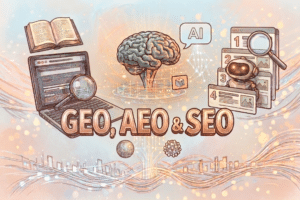
That shift is affecting SEO, AEO (Answer Engine Optimization), and GEO (Generative Engine Optimization). Search engines and machine learning-based discovery platforms are increasingly prioritizing content and websites that match closely with user intent and deliver clear, helpful experiences.
Traffic alone does not guarantee growth. A business can rank well, run successful campaigns, and generate significant visibility while still struggling to convert customers if the experience after the click is weak. The companies that grow consistently are usually the ones that make the customer journey easier, clearer, and more trustworthy.
If you’d like to see how to apply this strategy to your website, click the link below to schedule a free consultation.