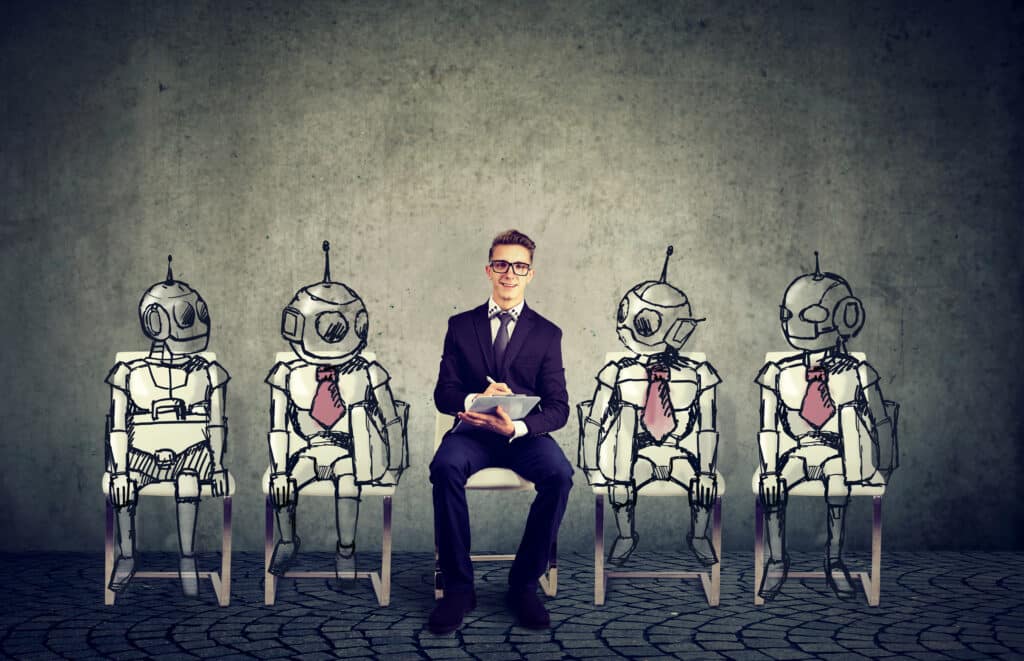
AI Is Transforming Digital Marketing, but Not Without Trade-Offs
Artificial intelligence is reshaping the digital marketing landscape in some pretty profound ways. From automating routine tasks to powering advanced SEO strategies, tools like ChatGPT and Gemini are now embedded in many teams’ workflows. As with any disruptive technology, though, AI brings both opportunities and challenges. Understanding the pros and cons of AI in digital marketing is essential for leaders who want to take advantage of innovation without sacrificing strategic depth, creativity, or customer trust.
Let’s examine how AI is helping marketers succeed, and where caution and human expertise still matter most.
What AI Excels at Today
Accelerating Content and Campaign Workflows
One of the clearest advantages of AI in digital marketing is its ability to automate and accelerate repetitive work. AI can generate first drafts of blog posts, suggest headlines, and help optimize email content, taking what used to be hours of manual labor and turning it into minutes of productivity. This substantially improves content throughput and allows teams to focus on strategy and creativity.
This doesn’t mean AI replaces human writers or strategists. Instead, it enables them to work more effectively by handling structural and repetitive tasks.
Smarter Data Analysis, Targeting, and Personalization
AI’s capacity to evaluate vast datasets quickly gives marketers access to richer customer insights and more precise segmentation than manual methods. AI-powered analytics allow businesses to track customer behaviors, preferences, and trends, enabling personalized messaging at scale and campaign optimization across multiple channels.
This kind of data agility supports strategies ranging from predictive targeting to dynamic content adaptation.
Improving SEO and Search Visibility
Artificial intelligence is also changing how content is optimized for search. AI-driven keyword review, semantic analysis, and optimization tools can help marketers tailor content to both traditional search engines and emerging generative AI search results.
For example, AI can identify topic clusters (webpages organized and interlinked around a central theme) and suggest relevant entities (concepts that have an agreed-upon meaning) that allow your content to perform better in rankings and AI-generated answers.
Where AI Still Struggles
Creativity and Human Insight Are (Thankfully) Hard to Replicate
Despite its usefulness, AI has limitations when it comes to originality and strategy. Machine learning can assemble coherent narratives and suggest ideas, but it doesn’t generate new ideas or perspectives with human nuance and intent. This gap highlights the ongoing need for human leadership in creative direction, brand voice, and strategic messaging.
Data Privacy, Bias, and Ethical Concerns
AI systems often rely on extensive customer data, which raises legitimate concerns around privacy, ethical use, and algorithmic bias. Without careful safeguards, marketers risk damaging consumer trust or violating privacy expectations, especially as regulations evolve.
A Lack of “Human Touch” and Emotional Connections
Many customers still value genuine human interactions, especially in service-oriented or emotionally driven industries. AI chatbots and automated messaging can handle common queries, but they can fall short when empathy, context, or deep problem-solving is required.
In short, AI shouldn’t be deployed as a complete substitute for human engagement.
Balancing Innovation With Strategic Guardrails
TechRadar notes that “more than eight in ten marketers globally are actively using GenAI” and reporting significant ROI. That said, high adoption doesn’t negate risk — it reinforces the need for responsible integration. Teams that pair AI capabilities with human oversight tend to balance innovation with quality, strategy, and brand integrity.
The Right Way to Use AI in Digital Marketing
Given the strengths and limitations above, the most effective approach in 2026 is neither “fully automated” nor “all manual.” Instead, it’s a hybrid model where AI handles data-intensive and repetitive tasks while humans lead on strategy, creativity, and final decision-making.
This means:
- Using AI for research, drafting, and optimization.
- Applying human judgment for strategy, brand voice, and originality.
- Maintaining ethical standards and transparency.
- Investing in training so that teams can interpret and apply AI outputs responsibly.
In practice, combining AI efficiency with human expertise increases content output without losing the elements that make a brand meaningful and memorable.
AI Is a Powerful Tool, Not a Self-Sufficient Strategy
AI is reshaping digital marketing at every level, yet it also brings challenges related to creativity, privacy, and the human touch. The most successful marketing teams don’t abandon human strategy; they use AI to amplify it.
Understanding both the pros and cons of AI in digital marketing helps marketers deploy these technologies in ways that enhance performance without sacrificing authenticity, trust, or quality.
Would you like to see how AI services and human insight can drive new business conversations for your team? Click the link below to schedule a free marketing consultation.